
Recent Research
Ecothropic recently completed a multi-year study on community-led interventions to address water security and drought.
We would like to thank our collaborators within the Water Resources Management Group | Wageningen University and Research (WUR), the Water Harvesting Lab | Università degli Studi di Firenze (UNIFI), the Hydrology and Environmental Hydraulics Group | WUR, the School of Earth Science | Mekelle University, ACWADAM, Buin Dannis, COPUDA, and Flor y Canto A.C.
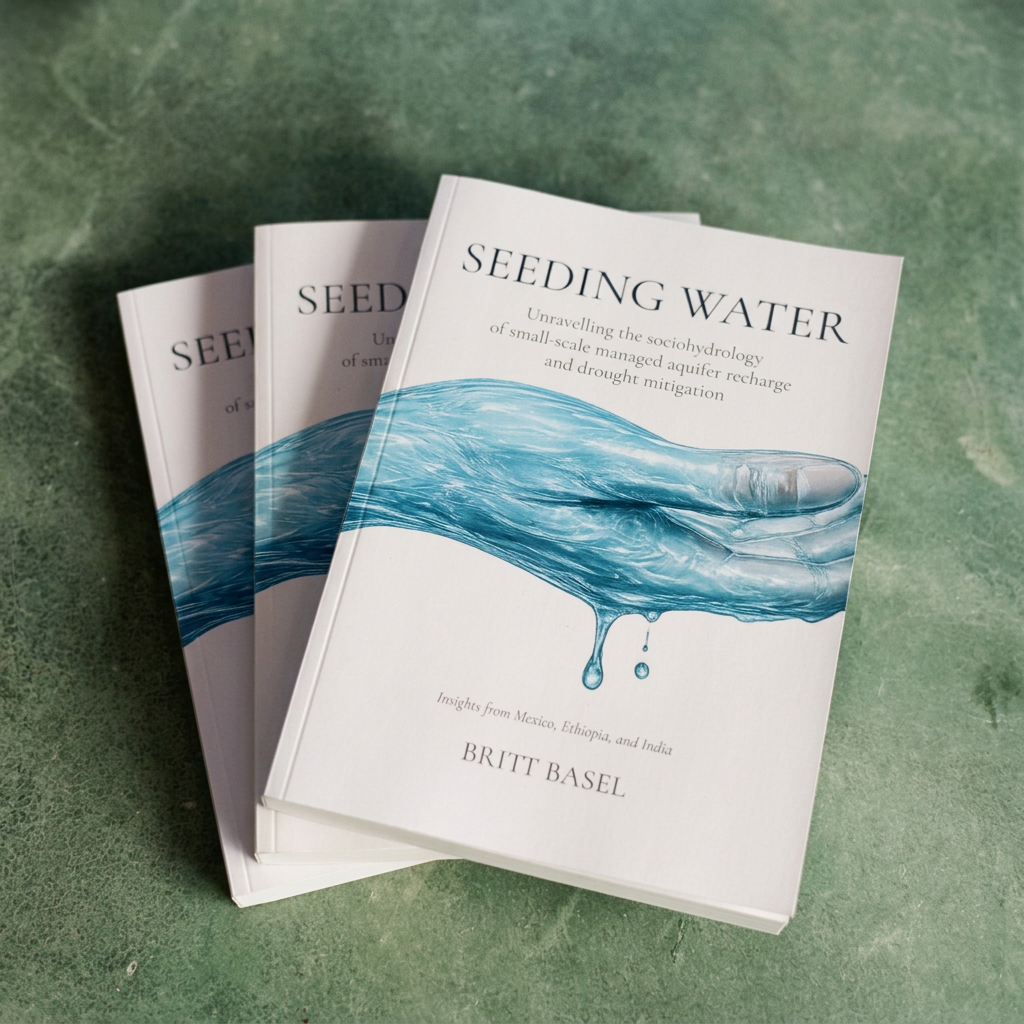
Seeding water: Unravelling the sociohydrology of small-scale managed aquifer recharge and drought mitigation: insights from Mexico, Ethiopia, and India
Abstract
Groundwater sustains life and livelihoods across much of the world. Shallow aquifers can buffer drought, storing precipitation during wetter periods that later sustains people and ecosystems. These reserves are being depleted, while groundwater recharge is increasingly limited by environmental degradation, urbanized landscapes, and shifting patterns of precipitation and temperature. Such trends are not only 'environmental.' They are shaped by decisions about land, infrastructure, and water allocations, and by what 'needs,' and whose 'needs,' are prioritized. Human responses to depleted aquifers are hydrological and technical. They are also unavoidably social, political, and rooted in how people value and understand both water and each other. Small-scale managed aquifer recharge (s-MAR), the replenishment of unconfined aquifers through low-cost, ecologically regenerative structures including check dams and gully restoration, is one response. Whether s-MAR addresses water scarcity, who benefits, and what it sets in motion depends on more than hydrology. Drawing on the social and hydrological sciences, this research asks: Why and how do people act to implement and maintain s-MAR, and how does s-MAR (re)shape social and hydrological systems? I developed a sociohydrological framework sharpened by political ecology to conceptualize what drives s-MAR implementation, how multi-scalar political and economic dynamics enable or undermine local action, and resulting feedback loops and consequences. Contrary to previous sociohydrological theory, experiencing drought was not a primary driver for action; it was people knowing they could act and experiencing benefit. Sustained s-MAR was rooted in increased hydrological fluency through direct participation; values of reciprocity and mutual accountability; participatory decision-making; local institutions organizing collective action; and a strengthened relationship between people and place. These dynamics enhanced capacity to respond to, cope with, or transform amid water scarcity and other hazards. Unintended consequences common in water interventions, for example, greater water availability resulting in increased use and renewed scarcity, were largely absent. This research argues that such consequences are not universal but reflect how water is understood and valued within a given context. These findings inform the Sociohydrology of Interventions Framework (SHIF), which provides a structure for understanding complex dynamics when implementing interventions intended to address water-related hazards. By integrating social norms, power relations, and institutions within linked human-water-climate systems, SHIF advances sociohydrology toward a more ontologically aware and context-based science of praxis.
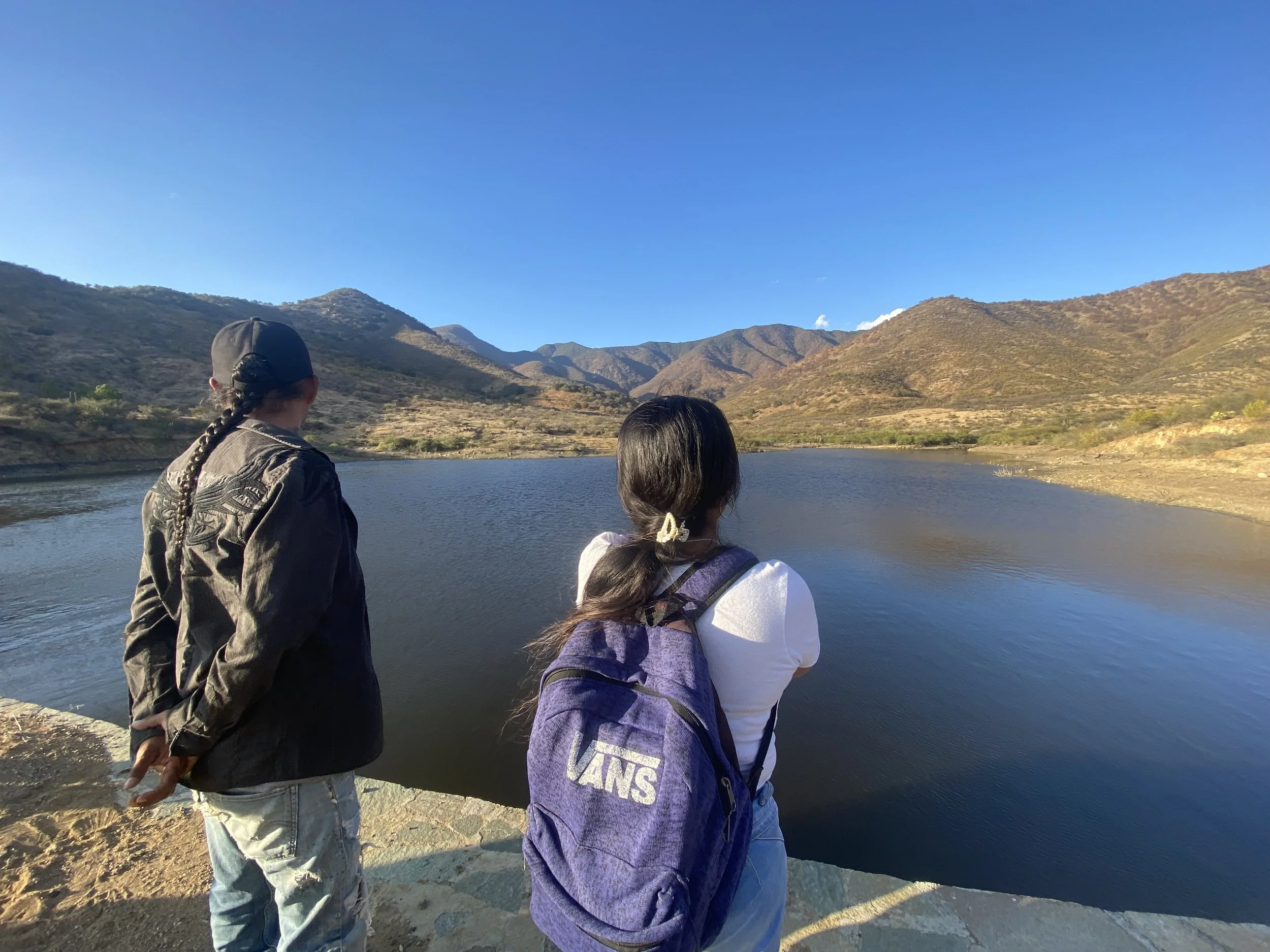
Community-led small-scale managed aquifer recharge can slow drought propagation: Sociohydro(geo)logical evidence from Oaxaca, Mexico
Abstract
This research assesses the role of small-scale managed aquifer recharge (s-MAR) in the attenuation of meteorological drought propagation. Human activity can induce or aggravate the drought cascade, threatening groundwater-dependent communities. In Oaxaca, Mexico, people have united to implement s-MAR techniques, using low-tech, ecologically sound, and low-cost structures to address water scarcity and drought. Efforts began shortly before an extreme drought in 2008–2009, and 2023–2024 brought the first significant meteorological drought since, offering an opportunity to assess s-MAR’s impact on drought propagation. Quantifying the hydrological impact remains difficult, especially in bottom-up s-MAR systems, where implementation is prioritized over monitoring. Using a sociohydro(geo)logical approach, the research questions guiding this paper are: (a) Can s-MAR attenuate the propagation of meteorological drought in rural groundwater-dependent societies? (b) How can data from the different scientific disciplines of sociology and hydrology complement each other in assessing the effectiveness of s-MAR in drought attenuation? Drawing on hydrogeological data, geospatial methods, climatic data, and social data, the analysis finds s-MAR attenuated drought propagation. The hydrological impact of s-MAR depended not only on biophysical and climate parameters but also on social factors. This study shows that incorporating social sciences in hydrogeological research can help address hydrological data gaps, and the complementary use of biophysical data and qualitative social data can uncover dynamics that would remain invisible if only hydrological data or socio-economic data were considered. A sociohydro(geo)logical approach offers a more comprehensive understanding of the context of interventions and complex system dynamics, supporting more effective solutions to water management challenges.
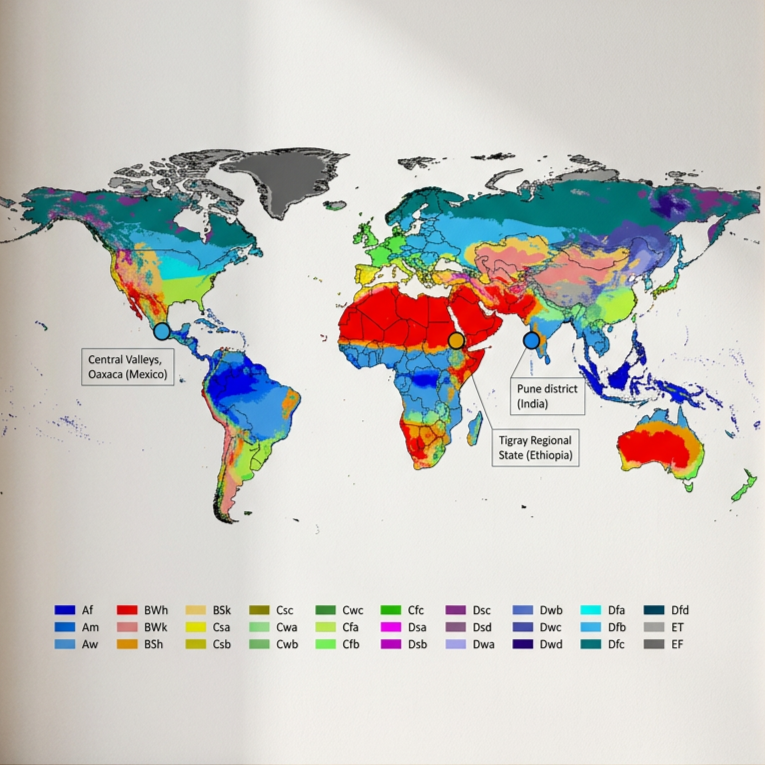
How humans bend the hydrograph: experiences in mitigating drought through small-scale managed aquifer recharge
Abstract
Small-scale managed aquifer recharge (s-MAR) can help replenish depleted aquifers, extend groundwater availability during dry seasons and drought, and reduce flooding. Whether s-MAR brings these benefits not only depends on hydrogeological conditions and technical design, but also on how interventions align with social norms, governance structures and local priorities. Drawing on s-MAR experiences in Ethiopia, India and Mexico, we apply a critical sociohydrological lens to examine how interactions between water, people and climate shape hydrological outcomes. We highlight implications for sociohydrology and improving the planning, participation and long-term governance of s-MAR interventions.